

This report identifies the key environmental issues facing the populations of Hadhramawt and Al Mahra today, based on interviews conducted in the two governorates. It highlights that formerly exceptional droughts, floods and typhoons have become common phenomena and that such disasters, alognside other environmental concerns, represent additional stressors on communities, local administrations and existing institutions for managing and resolving conflict and are complicating the relationship between recent arrivals to the governorates and established communities. The report closes with recommendations for local authorities, communities and international actors to mitigate the impacts of climate change and better manage the conflicts that derive from it.
Other resources you may be interested in:
Local Service Provision During War: A Case Study of Yemen
This journal article analyzes how conflict has shaped local service delivery across five Yemeni governorates and shows how governance capacity, political stability, resources, and external support, in particular humanitarian aid, effect outcomes. By analyzing how these elements shape local governance capacities, the paper highlights the disparities in service delivery and the challenges faced by local […]
Navigating post-conflict governance in Yemen: Decentralization, federalism, and the path to stability.
This journal article examines enhanced decentralization, federalism, and secession as alternative post-conflict governance models for Yemen and assesses their implications for stability and state-building. The study investigates what governance arrangements best align with Yemen’s political, social, and economic context; how institutional legitimacy and local autonomy can be balanced in a fragile, divided state; and what […]
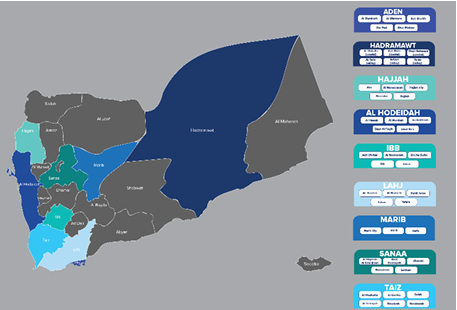
Strengthening Institutional and Economic Resilience in Yemen (SIERY) – Final Evaluation Report.
This final project evaluation assesses the UNDP SIERY project’s performance from 2020–2025 in strengthening local governance, public service delivery, and economic resilience across nine governorates in Yemen. Given this project has been the largest project in terms of funding volume and geographical coverage supporting local governance in Yemen, it offers interesting insights in the opportunities […]